
A Conversation with Sabastian Niles on the Legal Profession in the Agentic AI Era
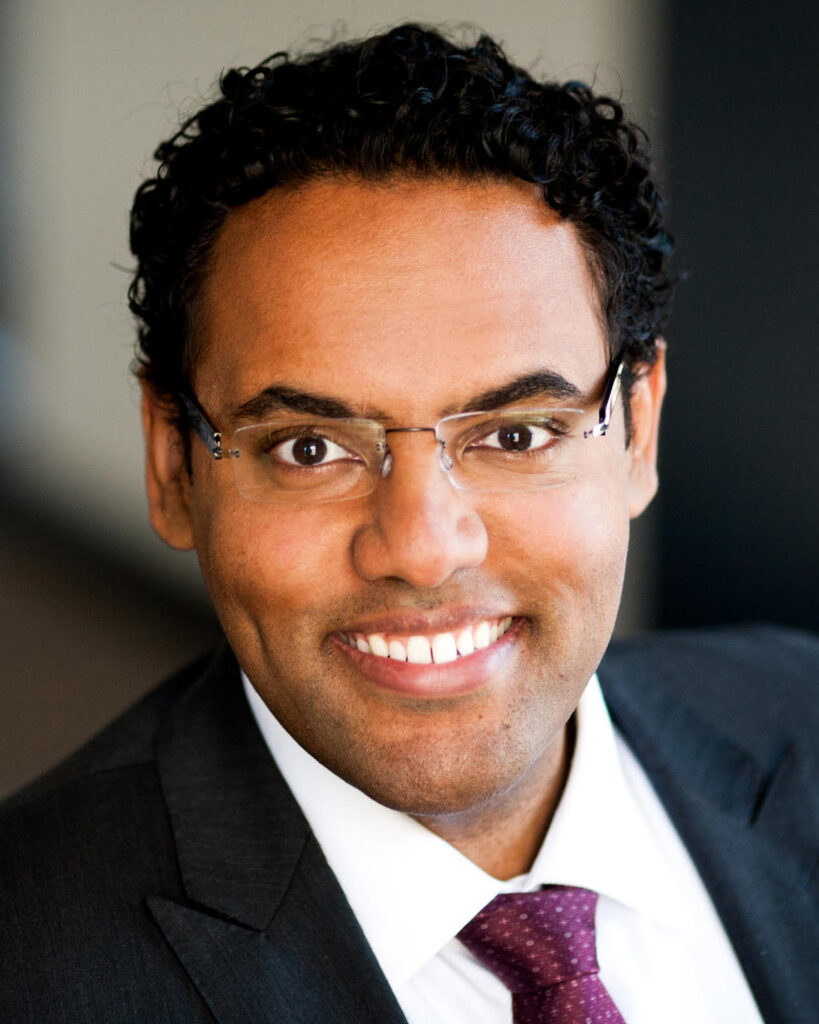
In March, Salesforce president and chief legal officer Sabastian Niles put out an open letter, How Law Firms Can Lead the Agentic AI Era — And What Clients Now Expect. He recently sat down with David B. Wilkins, CLP faculty director, to discuss what motivated his thinking.
David B. Wilkins: Let’s start with this: Why did you feel called to put out this letter?
Sabastian Niles: The letter grew out of conversations I’ve been having for years—going back to when I co-founded the Harvard Association of Law and Business as a student. I’ve always been interested in how law interacts with strategy and policy in a broader institutional and multi-stakeholder context, in the face of emerging opportunities, pressures and risks, advances in technology and inter-disciplinary change.
At Wachtell Lipton for example, I kept asking: what conversations and approaches are we embracing inside the firm to make sure we’re really delivering what clients expect—our legal judgment, innovation and strategic execution, differentiated outcomes across stakeholders, and long-term success?
Now, as president and chief legal officer of Salesforce, I’m having similar conversations with business leaders and in-house lawyers about AI, “agentics,” technology, and data.
These concepts are still new for many. But when you pull the threads together, a common set of questions emerges: What should we do? What shouldn’t we do? What delivers value? Why are some firms or companies lagging? Do they even see that they’re lagging? What does great look like? How do we unlock the capacity of our people?
And, perhaps most fundamentally, how do we bring together humans, data, applications, AI, and agents to serve the core purpose of an institution? And how do we re-ground corporate and institutional purpose in a high-velocity and high-complexity world?
My letter and other work pull those themes into a framework and provide a call for law firms—and really the broader professional services ecosystem and companies across industries—to apply their leadership to these changing realities.
Wilkins: What are you doing inside Salesforce, both within the legal function and across the company, that contrasts with what you’re seeing in law firms?
Niles: At Salesforce, our vision is to enable every business and government to become an agentic enterprise that delivers on their core missions. That includes modeling what it means to be an AI‑native, trust‑first global company at scale—and, within that, an “agentic” legal function that really delivers on the promise of human–agent collaboration.
We have two advantages. First, we build leading enterprise AI software on a unified, trusted, platform. Second, we can deploy that same technology internally–that includes having our people come forward with their best ideas to inform where and how we leverage technology. I’m constantly asking: how do we make ourselves “customer zero” for the solutions we offer the market?
Take Slack. We run the entire company on Slack, and our legal, compliance and risk teams are using Slackbot as “customer zero.” Slackbot – which brings together context, conversation, and action directly in the flow of work – is trained by our legal team to respond to internal clients. This includes answering questions, proposing plans, and doing it at scale with our legal judgment baked in. Tools like Slackbot free up our legal team to focus on continuing to build trust and navigate high-stakes complexity.
We also expect our vendors and trusted partners—including law firms—to show the same level of digital maturity we hold ourselves to. That’s part of a broader partnership mindset. We use Slack Connect for example so we can work together on issues in real time. We also created LCAio, a joint innovation group that combines our legal innovation and legal ops teams under one roof and partners with outside law firms and innovative service providers to co‑develop solutions.
An example is our “outside counsel support agent.” It helps firms and our internal teams manage common issues—questions, workflows, recurring tasks. But more importantly, it supports a shift in mindset for in‑house lawyers:
We’re not just providers of judgment and execution; we’re also sophisticated purchasers and stewards of the company’s capital. We have to consciously decide where to deploy finite resources: Which matters should the internal team handle? Which should go to external firms? How do we break work into components and match each piece to the right provider or tool?
At Salesforce, we believe the future is “agents at scale”—and we’re realizing that vision with our Agentforce 360 Platform, Slack, agentic CRM and other applications and integrations that drive business value. We’re moving toward autonomous processes and agents that can responsibly reason, plan, and act on behalf of individuals, teams, and the company. That raises essential design questions: What should be probabilistic, what should be deterministic and what are the building blocks for the agentic harness that provides the critical scaffolding, context and operating system to convert raw model intelligence into trusted transformation? Where do we set guardrails, deploy controls and implement effective governance and trust?
To me, that echoes classic legal debates about rules versus standards. You have to bring those perspectives together.
Law is both a profession and a business—and lawyers ought to be keenly attuned to questions of trust, accountability, risk, and governance.
Sabastian Niles, president and chief legal officer, Salesforce
Our goal—and our reality now—is to embed AI agents into every workflow. They help with intake, triage, routing, and eventually assignment and execution. When response time accelerates, when internal clients are empowered through effective self-serve delivery models and when our global teams are augmented with agentic capabilities, we remove friction, mitigate risk, simplify processes and advance business priorities faster. At scale, this compounds, serving as a true force multiplier for our customers, partners, and business.
But especially in legal, where risk, accountability, and trust are central, we maintain strong human oversight—and ultimately augment and support that oversight with cutting-edge technology. The question becomes what standard are we holding ourselves to as legal, compliance and risk functions—and what standard do we expect from our external firms, advisors, and partners?
Wilkins: Your law firms are starting from a very different place. Salesforce is digitally native and becoming AI‑native, but no law firm is truly AI‑native yet. Where do you see the biggest challenges in getting humans and technology to work together—both internally and with outside firms?
Niles: From the client’s perspective, this moment forces us to ask a very basic set of questions: What are we buying, why are we partnering, and who should we trust?
When we engage law firms and other professional service and advisory forms, are we buying inputs (time, hours)? Outputs (documents, memos)? Judgment? Risk mitigation, allocation and transfer? Speed? Outcomes?
I think we’re moving toward a new shared operating system for risk, judgment, and execution—across companies, law firms, and other advisors.
Law is both a profession and a business—and lawyers ought to be keenly attuned to questions of trust, accountability, risk, and governance. That’s why, in serious enterprise systems, governance is so critical. You need visibility, observability, auditability and explainability.
That’s also how you defend regulated workflows—and it should also apply to how law firms and clients work together. Some clients have told their law firms, “You shall not use AI.” Law firms can point to that as a barrier: “We’d like to innovate with technology and agents, but our clients prohibit it.”
How do we build integrated, cross‑functional, cross‑silo workflows where humans and agents collaborate effectively?
Sabastian Niles
That raises deeper questions: Is this really about innovation avoidance—using client concerns and mandates as an excuse? Or is it fundamentally about trust and understanding? Do clients distrust AI, or do they distrust how AI might be used? As in all dimensions of life, trust can be earned, and trust can be broken.
My view is that we need to move into what I call “trusted agentics”: intelligent systems that are human‑aligned, reliable, and deserving of trust. That requires clear design decisions. What is the agent’s role? What data can it access? In what channels does it operate (Slack, phone, email, other tools)? What tasks is it allowed to perform? Just as importantly: what is it explicitly not allowed to do—and how do we enforce that?
If you think about it, those categories—roles, tasks, access, guardrails—sound a lot like how we define human jobs and regulate behavior. Employees have roles, responsibilities, permissions, and codes of conduct. AI agents need the same clarity.
The real frontier is teaming: not just human‑human teams, but human‑AI teams across platforms. How do we build integrated, cross‑functional, cross‑silo workflows where humans and agents collaborate effectively? How and where do we invest in our people to build their agentic capabilities, elevate their level of AI fluency, help them do the best work of their careers and empower our teams to leverage these cutting-edge technologies in the ways that our people on the front line as well as those in leadership positions know will have the most impact? That’s the challenge ahead for in‑house departments and law firms alike.
Wilkins: One of the points we’re making in this series is that AI shouldn’t be so frightening for senior lawyers. They already know how to delegate work: they give context, review what comes back, interrogate it, then add their own deep, domain‑specific expertise. If we thought of AI that way—rather than as a mysterious machine that might “take over”—we might be better off.
Niles: I agree. A phrase I often use with law firm partners, internal teams, and business leaders is “the beginner’s mind blended with expertise.”
That’s what this moment calls for.
We don’t throw out the accumulated body of legal work. We respect it, extend it, and apply it in new ways. Senior lawyers bring decades of pattern recognition, judgment, and professional norms. If they approach AI with curiosity instead of fear—manifesting a beginner’s mind plus deep expertise—that’s how we unlock real progress.
Sabastian Niles is the president and chief legal officer of Salesforce.
David B. Wilkins is the faculty director of the Center on the Legal Profession at Harvard Law School.



Knowledge Search
Search all of our knowledge, from The Practice to Insights to Academic Publications and Reports in one place.