
The following is an excerpt of the book, Law in the Era of AI: Clients, Firms, and the Future of the Legal Industry (pp. 1-2, 9-11). It is reprinted with permission from its publisher Wiley (2026). A Q&A with the author, Bjarne P. Tellmann, follows the excerpt.
History is replete with moments when technological innovation transforms society and work. Artificial intelligence (AI) is one such moment. It, along with other emerging technologies, is not just making the delivery of legal services more efficient; it is fundamentally reshaping what legal work is, how it is delivered, and who is best placed to deliver it.1
I have spent 30 years as a corporate lawyer, working across major law firms and multinational corporations, including as General Counsel (GC) of two large public companies. My career has stretched across Europe, Asia, the United States, and the Middle East, in executive roles spanning multiple industries. In that time, I have watched the legal profession evolve—from the tentative adoption of email and document management systems to the rise of sophisticated legal operations teams and the growth of alternative legal service providers (ALSPs).2 Yet, nothing in those decades compares with the scale, speed, and impact of the transformation now underway.
AI is not simply another innovative tool.
This book examines how AI is reshaping competitive dynamics in the legal industry and why clients will be the primary force driving that change. It explores the implications for law firms, considers the new legal services models that may emerge alongside or in place of the traditional law firm, and outlines the strategies firms will need to adopt to position themselves for success.
AI is not simply another innovative tool. It is what economists call a ‘general purpose technology’ (GPT)—a breakthrough with broad applications that can spark complementary innovations. It will touch every sector of the economy in the years to come.3 Like earlier GPTs, such as steam power in the nineteenth century or electricity in the twentieth, AI will reshape entire industries, redefining how companies are structured, how they operate, and how they create value.
Over the coming decade, nearly every business will re-engineer its core processes and operating models around AI. As this transformation unfolds inside companies, legal departments will evolve in parallel, adapting their structures, service models, and technologies to align with the needs of AI-driven enterprises.
As in-house legal teams retool, they will increasingly harness AI as a core driver. AI will fundamentally change how legal departments operate and, in so doing, will redefine what clients require from outside counsel. Transformed clients will expect law firms to adapt in turn, delivering greater efficiency, innovation, and value, while integrating far more closely with the client’s own operations.4
Work once sent to outside counsel is increasingly getting done in-house, at far lower cost. For higher-margin matters that remain externally sourced, clients will expect seamless integration with their technology-led models. To meet those expectations, law firms will need to operate at the speed of AI and deliver services tailored to the client’s evolving context.
The forces that will transform the legal sector are already taking shape.
Given these dynamics, law firms could soon face a perfect storm of disruption. Negative inflection points (signals in the environment that indicate imminent change) are difficult for dominant industry players to spot. Many law firms are currently enjoying record profits, underpinned by long-standing competitive advantages and high barriers to entry. But those very same advantages can mask early signs of disruption and make it difficult for law firms to adapt or innovate. This book examines how they might respond.
The forces that will transform the legal sector are already taking shape, and several potential new models are gradually emerging. We will explore some of these.
Finally, as the legal services landscape shifts, lawyers will require new skills and capabilities. We will ask how law schools and universities can ensure graduates are well-equipped to succeed.
Related content

Related content
Expanding on Law in the Era of AI with Bjarne P. Tellmann
How Corporations and Their Legal Departments Co-evolve
To understand why corporate legal departments are now positioned to disrupt the traditional law firm model with AI as a key accelerant, we must trace their own evolution. This requires us to consider how MNCs and the legal teams that serve them have developed, how they operate today, and where they are heading.
As corporations have reshaped themselves in response to successive waves of geopolitical, technological, and operational change, so too did their legal departments, with far-reaching consequences for law firms and other external providers.The fortunes of outside counsel and alternative suppliers have always been closely bound to those of their clients.
Since the end of World War II, GCs have navigated four distinct eras. While these are not formally recognised historical periods, their demarcation reflects the major geopolitical, macroeconomic, and technological shifts that reshaped MNCs and, by extension, the legal departments that serve them.
Throughout these periods, the twin dynamics of risk and efficiency have taken on increasing relevance, reshaping how legal departments work and what they need from their external providers.
GC 1.0 (1945–1989) emerged during early modern globalisation, which was characterised by relative geopolitical and macroeconomic stability and the rise of the modern MNC. Legal needs were localised and relatively simple. Professional business managers were born, and with them the modern law firm. In-house teams were small or non-existent, and law firms captured most work through ‘one-stop-shop’ models.
GC 2.0 (1989–2007) began with the fall of the Berlin Wall and culminated with the introduction of the iPhone. This was the golden age of modern globalisation. As operational, technological, and macroeconomic complexity increased, the needs of MNCs outgrew what the one-stop-shop model could cost-effectively and qualitatively provide. Legal departments expanded accordingly, becoming more powerful and influential, often at the expense of law firms, which moved upmarket into higher-value work.
GC 3.0 (2007–2022) coincided with the rise of the Internet, social media, and platform economies. It heralded the start of the Fourth Industrial Revolution (4IR). Following on the First (mechanisation), Second (mass production), and Third (early computerisation) Industrial Revolutions, 4IR integrated digital, biological, and physical systems transforming industrial processes, manufacturing, and engineering.5 It fused the emergence of smart and connected machines with innovations in areas ranging from gene sequencing and nanotechnology to renewable energy.6 It was the integration of these technologies across multiple domains, rather than any single innovation, that made 4IR impactful, accelerating the pace of change, reshaping global supply chains, and introducing a new era of volatility and opportunity.
To understand where the legal sector is heading, we must first understand the story of how legal departments have evolved.
Facing growing volatility and cost pressures, MNCs diverted resources towards technology, process improvement, and R&D. Legal departments, forced to do more with less, turned to technology and outsourcing. GCs became CEOs of their departments, driving efficiency and procurement discipline. As law firms struggled to adapt, ALSPs emerged at the margins, capturing lower-level work that had previously gone to firms.
GC 4.0 (2022–present) was triggered by the introduction of generative AI, marked by the public release of Open AI’s ChatGPT.7 With innumerable applications across the economy, AI has the potential to reshape entire industries. Legal is no exception and the shift is foundational. As noted in the Introduction, Parts II–IV will explore the GC 4.0 era, including how companies and legal departments are evolving in the face of AI, the impact that it is having on external providers, and the implications that it will have on the sector as a whole.
History is the lens through which we can anticipate what comes next. To understand where the legal sector is heading, we must first understand the story of how legal departments have evolved—because it is on the client side that the change which will profoundly impact the industry first emerged.
Law in the Era of AI: Clients, Firms, and the Future of the Legal Industry (Wiley 2026)
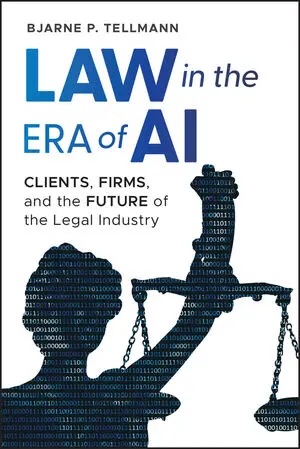 In Law in the Era of AI: Clients, Firms, and the Future of the Legal Industry, seasoned public company general counsel Bjarne P. Tellmann, draws on 30+ years of global legal experience to explore how AI-enabled clients will transform the legal profession. As technology reshapes corporate structures and decision-making, legal departments are evolving at unprecedented speed. Tellmann examines the forces driving this shift and reveals what it means for law firms, in-house teams, and the future of legal services, offering a roadmap for leaders navigating this era of disruption. This is a powerful story of technological, organizational, and competitive change that no legal leader can afford to ignore.
Drawing on both research and firsthand insights, Tellmann offers a rare, client-centric perspective on the future of the legal profession. Tellmann walks you through how in-house legal departments have evolved, what they look like today, and where they’re likely heading. He reveals how shifts in the structure of multinational corporations are reshaping the way in-house counsel deliver legal services, which in turn is creating pressures that will disrupt the law firm model itself.
Law in the Era of AI also discusses why the traditional law firm model is misaligned with evolving client trends and why, despite consistent and growing pressure, firms remain resistant to change and unable to adapt. It also explores what the law firm model might look like in the AI Era and what alternative legal service models could emerge as the industry shifts.
Bjarne Philip Tellmann advises leading law firms and in-house departments on organizational excellence and digital transformation in the legal industry through his consultancy, FjordStream Advisors. Previously, he served as founding general counsel and member of the executive committee at Haleon, a FTSE 20 company and the world’s largest consumer health business. At Haleon, he led the legal and compliance work associated with the company’s demerger from GSK, among the largest and most complex corporate separations in recent U.K. corporate history. Previously, as chief legal officer and general counsel at Pearson, a FTSE 100 global education company, Tellmann redesigned and digitized the legal department, reducing costs by more than 40% while improving service quality. He has also held senior leadership roles across Europe, Asia, the Middle East, and the U.S. at Coca-Cola, Aramco, Kimberly-Clark, and the law firms Sullivan & Cromwell LLP and White & Case LLP.
Image Credit: Shutterstock // Summit Art Creations
- For a definition of AI and a discussion of it and related concepts, see Chapter 5 [↩]
- ALSPs, which will be discussed and defined in greater detail in Chapter 10, are organizations that provide legal and legal-adjacent services outside the traditional law firm model by leveraging models, processes, or tools that represent a significantly different approach to creating or providing legal services that what the legal profession traditionally employed. See Jordan Furlong, ‘An Incomplete Inventory of NewLaw’, Law21 blog, 13 May 2014, https://www.law21.ca/2014/05/incomplete-inventory-newlaw/. ALSPs often provide these services more effectively, and at lower cost, than law firms or in-house teams can. Services offered by ALSps typically include flexible staffing, contract management, document review, e-discovery, regulatory compliance, and legal operations support, as well as a growing range of consultancy and advisory, software, and even advisory services. [↩]
- We will consider the contours of a GPT in greater detail in Chapter 5, but it can be defined as ‘a single generic technology, recognizable as such over its whole lifetime, that initially has much scope for improvement and eventually comes to be widely used, to have many uses, and to have many spillover effects’. Richard G. Lipsey, Clifford T. Bekar, and Kenneth I. Carlaw, ‘The Consequences of Changes in GPTs’, in General Purpose Technologies and Economic Growth, ed. Elhanan Helpman (Cambridge, MA: MIT Press, 1998), 193-218, cited in Nicholas Crafts, ‘Artificial Intelligence as a General Purpose Technology: An Historical Perspective’, Oxford Review of Economic Policy 37, no. 3 (2021): 521, https//doi.org/10.1093/oxrep/grab018. For a discussion of how AI is transforming how companies are structured, how they operate, and how they create value, see Marco Iansiti and Karim R. Lakhani, Competing in the Age of AI: Strategy and Leadership When Algorithms and Networks Run the World (Boston, MA: Harvard Business Review Press, 2020). See also McKinsey & Company, ‘The State of AI: How Organizations are Rewiring to Capture Value’, 12 March 2025, https://www.mckinsey.com/capabilities/quantumblack/our-insights/the-state-of-ai and Sumeet Gupta and Carl Jones, ‘Rethinking Business Models with AI’, FTI Consulting, 8 January 2025, https://www.fticonsulting.com/insights/articles/rethinking-business-models-with-ai. [↩]
- See LexisNexis, ‘Majority of Corporate Legal Departments Anticipate Gen AI to Slash Expenses’, LexisNexis Insights, 11 March 2024, https://www.lexisnexis.com/community/insights/legal/b/thought-leadership/posts/majority-of-corporate-legal-departments-anticipate-gen-ai-to-slash-expenses-76-in-house-counsel-agree. (The vast majority of corporate executives at Fortune 1000 companies expect their investment in Gen AI to increase over the course of the next five years, and they have high hopes for how this investment will ultimately reduce their operational costs.) See also Thomson Reuters, ‘Pricing AI-Driven Legal Services: Lead or Follow?’, 30 January 2024, https://www.thomsonreuters.com/en-us/posts/legal/pricing-ai-driven-legal-services-lead-or-follow/. (2025 is likely to be a year in which lawyers need to start making decisions around AI and define the changes they want to see—or those changes will be defined for them.) [↩]
- Unity Technologies, ‘Fourth Industrial Revolution (4IR)’, Unity Glossary, 2025, https://unity.com/glossary/fourth-industrial-revolution. [↩]
- Iberdrola, S.A., ‘What is the Fourth Industrial Revolution’, in Industry 4.0: Which Technologies Will Mark the Fourth Industrial Revolution, https://www.iberdrola.com/about-us/our-innovation-model/fourth-industrial-revolution#:~:text=The%20concept%20of%20the%20Fourth,fundamentally%20different%20from%20previous%20revolutions. [↩]
- Generative AI, a branch of deep learning that uses exceptionally large neural networks called large language models (with hundreds of billions of neurons) that can learn especially abstract patterns, will be discussed in Chapter 5. [↩]